
How Foreigners Buy Property in Egypt: 2026 Legal Guide
How Foreigners Buy Property in Egypt: 2026 Legal Guide
Reading time: 7 minutes
Last updated: August 2026
—
The short answer: yes, foreigners can absolutely buy property in Egypt, and the 2026 process is faster and more foreigner-friendly than at any point in the country’s modern history.
This guide covers the exact legal framework, the documents you need, the costs involved, and the 2024 residency-by-property amendment that changed the calculus for European buyers. It’s written for buyers from Germany, UK, Italy, Poland, Czech Republic, Russia, and other non-Egyptian nationalities — most of the practical details apply to everyone, but residency thresholds and tax treatment vary by treaty.
—
The legal framework in plain English
Foreigners can own residential property in Egypt under Law 230 of 1996 (as amended), which grants non-Egyptians the same ownership rights as Egyptian citizens, with one important restriction: you cannot own land directly — you can own the building or unit on the land, but the land itself remains on a 50-year renewable lease. In practice, this means you own your apartment or villa “forever,” and the developer or master developer owns the land.
The registration happens at the local Real Estate Registry (السجل العقاري), and the property is recorded in your name in the national property database. This is a fully transferable, mortgageable, inheritable ownership — not a lease.
Key rights you have as a foreign owner:
- Sell the property at any time
- Rent it (short-term or long-term)
- Pass it to heirs
- Use it as collateral for a loan
- Apply for residency on the basis of ownership
Restrictions to be aware of:
- Maximum 2 properties per foreign individual (in practice, this is rarely enforced for residential buyers; commercial buyers face stricter limits)
- You cannot buy agricultural land directly
- Sinai-specific restrictions (some areas require military approval — not relevant to Hurghada buyers)
- Properties in certain border zones require security clearance (also not relevant to Hurghada, El Gouna, Sahl Hasheesh, Makadi, or Soma Bay)
—
The 2024 residency amendment — the biggest change
Before 2024, owning property in Egypt did not directly grant residency. The 2024 amendment to the Investment Law changed that.
The new rule:
- Property purchase of $200,000+ qualifies the buyer, spouse, and minor children for a renewable 5-year residency
- The residency is independent of the property — you can rent out the property and keep the residency
- The residency is renewable as long as you still own the qualifying property
- You can apply for Egyptian citizenship after 5+ years of continuous residency (separate process, longer review)
Practical impact:
- $200,000 (≈ €180,000 at 2026 rates) is achievable in every major Hurghada district
- A 2-bedroom apartment in Sahl Hasheesh, a 2-bedroom in Magawish, or a 3-bedroom in Al Ahyaa all qualify
- The residency includes access to local banking, healthcare, and a local driving license
- Family members can be added at the time of application
Processing time: 60–90 days from property registration to residency card in hand.
—
What the process looks like (step by step)
Here’s the realistic timeline from “I want to buy” to “I have keys and residency”:
Step 1: Choose the property and developer (Week 1–2)
- Shortlist 3–5 properties matching your criteria
- For each property, verify: developer reputation, project delivery history, building permits
- Engage a local agency (like us) for due diligence — this is a 2–3 hour process that catches issues most buyers miss
Step 2: Reservation agreement (Day 1 of formal process)
- Sign a reservation contract with the developer
- Pay 5–10% deposit (refundable within 7–14 days in most cases)
- This locks the unit and starts the contract drafting
Step 3: Main purchase contract (Within 14–30 days)
- Sign the full purchase agreement
- Includes: unit specifications, payment schedule, delivery date, warranty terms, penalty clauses
- Have an Egyptian lawyer review it before signing (a 30-minute review that costs €200–400 — money well spent)
Step 4: Payment schedule begins
- Follow the developer’s payment plan
- Most developers accept wire transfers in USD, EUR, or
- Bank fees typically 0.5–1.5% of the transfer amount
Step 5: Property registration (30–60 days after final payment OR signing, depending on the project)
- The property is registered in your name at the Real Estate Registry
- You receive the original title deed (a green booklet for old properties, a digital certificate for newer ones)
- This is the moment legal ownership transfers to you
Step 6: Apply for residency (optional, 60–90 days)
- Submit application at the Egyptian Immigration Office
- Documents needed: passport, property title, proof of address, tax ID, health insurance
- Residency card issued within 60–90 days
Total time from start to finish: 3–6 months.
—
The actual costs
Beyond the property price, here’s what a €200,000 Hurghada apartment typically costs to buy and own in year 1:
| Item | Cost | Notes |
|—|—|—|
| Property price | €200,000 | Negotiated |
| Transfer tax | €6,000 (3%) | One-time, on registration |
| Lawyer review | €300 | One-time, optional but recommended |
| Tax ID application | €50 | One-time |
| Real estate registry fees | €500 | One-time, includes title issuance |
| Residency application | €800 | One-time, per family |
| Strata fees (year 1) | €1,200–2,500 | Annual, varies by compound |
| Property insurance | €150–300 | Annual, optional but recommended |
| Bank account opening | €0 | Most banks don’t charge for residents |
| Total additional cost (year 1) | ~€9,000–11,000 | About 4.5–5.5% of property price |
Ongoing annual costs (years 2+): strata fees + insurance + optional property management = €1,500–3,500/year.
—
Tax treatment for foreign owners
Egypt has a relatively tax-friendly regime for foreign property owners:
- Rental income tax: 10% flat on net rental income (after deducting expenses, depreciation, and management fees). For most buy-to-rent investors, the effective rate is 6–8% of gross rent.
- Capital gains tax on sale: 0% if the property was your primary residence and you held it 5+ years. 10% on second homes or properties held <5 years. (Note: this is being reviewed for 2027 — buyers with a 5+ year horizon are insulated from any change.)
- Annual property tax: Negligible (0.1% of property value for residential properties under 500 m²)
- Inheritance tax: None for direct family members. Property passes to heirs at zero tax cost.
For German buyers specifically: under the Germany-Egypt double-taxation treaty, rental income is taxable in Egypt first, then creditable against German tax. Most German tax advisors are familiar with this setup.
For UK buyers: Egypt-UK treaty follows the same pattern. UK SA106 form has a specific “foreign property” section that covers Hurghada.
—
What can go wrong (and how to avoid it)
Five real risks we’ve seen in 12+ years of combined Hurghada transactions:
1. Buying from a developer with delivery issues. Some smaller developers have started projects, collected deposits, and then stalled. Always check: (a) how many projects has the developer completed, (b) are those projects delivered on time, (c) is the developer financially stable.
2. Buying off-plan without independent inspection. Off-plan pricing is attractive (10–20% below resale), but you can’t inspect the actual unit. The contract specifications matter — what finishes, what AC, what kitchen. Always have a lawyer review the off-plan contract.
3. Title issues on resale properties. Some older resale apartments have unclear title chains or pending litigation. Always run a title search at the Real Estate Registry before paying any deposit on a resale.
4. Underestimating strata fees. Some compounds have very high strata fees (€3,000+/year) that aren’t disclosed upfront. Always ask for the last 2 years of strata financials before buying.
5. Currency risk on -denominated contracts. If your contract is in , the devaluation risk is on you. USD or EUR contracts are safer. Always ask which currency your contract will be in.
—
A practical 5-step checklist for 2026 buyers
1. Decide your goal: live part-time, rent long-term, rent short-term, or hold for appreciation. Each goal has a different optimal district.
2. Get pre-qualified on currency: know how much you can transfer out of your home country. Bank transfer limits and FX costs can affect your effective budget by 5–10%.
3. Shortlist 3–5 properties in 2 districts maximum (don’t spread your research too thin).
4. Engage a local independent agency (not a developer-direct sales office) for due diligence and contract review.
5. Plan a 4-5 day visit to view 4-6 shortlisted properties, meet the lawyers, visit the Real Estate Registry, and tour the districts at different times of day.
If you’d like help with any of these steps, our team can put together a 3-property shortlist within 48 hours based on your budget, goal, and timeline. We’re a Hurghada-based agency with German-standards due diligence, and we don’t take commissions from developers — so the shortlist is genuinely independent.
Contact: WhatsApp +20 106 139 9260 · Telegram @MAMOPropertyBot · mamoproperty.com/contact
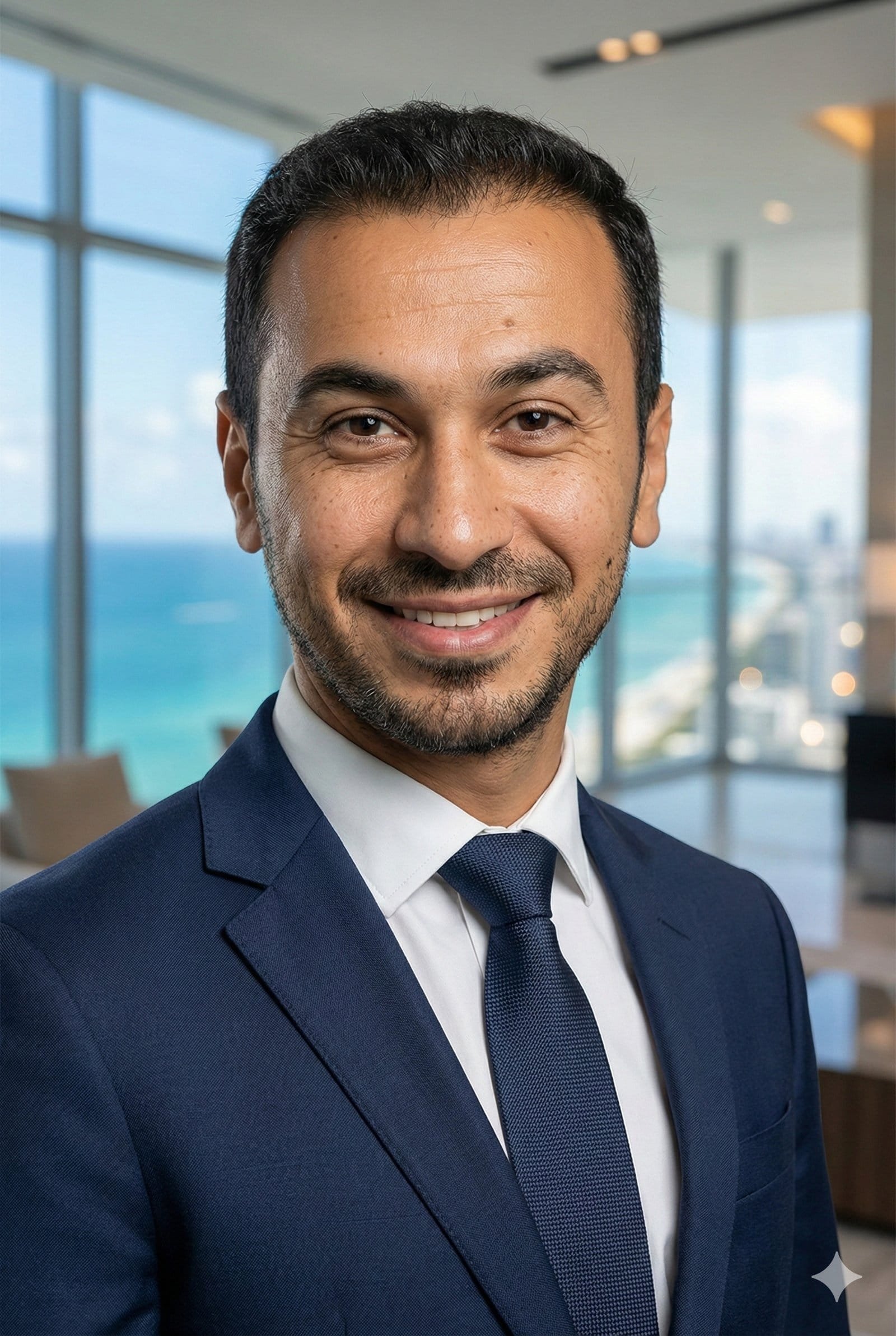
Co-founder of MAMO Property, real estate specialist in Hurghada with 16+ years experience in Egyptian property market.