

Understanding Property Taxes in Egypt for Foreigners: A 2026 Guide
Understanding Property Taxes in Egypt for Foreigners: A 2026 Guide
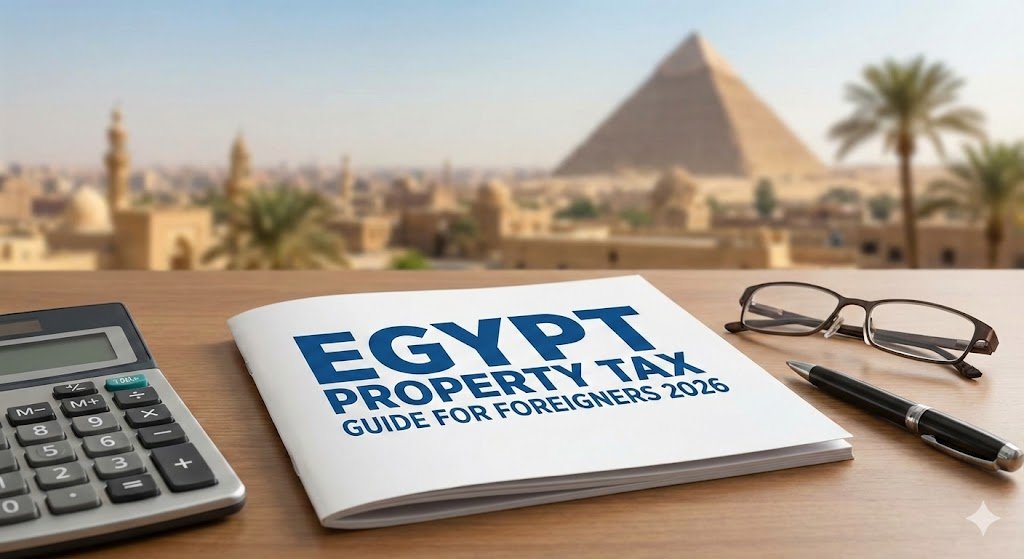
Investing in property abroad opens doors to many opportunities, and Egypt’s rich culture, stunning coastlines, and vibrant cities make it an attractive destination for foreign investors. However, before diving into real estate in Egypt, it is crucial to understand the property taxes that apply, especially for foreigners. This guide will walk you through the important tax obligations and strategies that apply to you as you consider property investments in Egypt.
In 2026, property taxes in Egypt for foreigners include annual taxes on property ownership, transaction fees, and specific regulations pertaining to foreign ownership. Familiarizing yourself with these aspects will not only aid in making informed decisions but also ensure compliance with Egyptian law.
Annual Property Tax for Foreign Owners
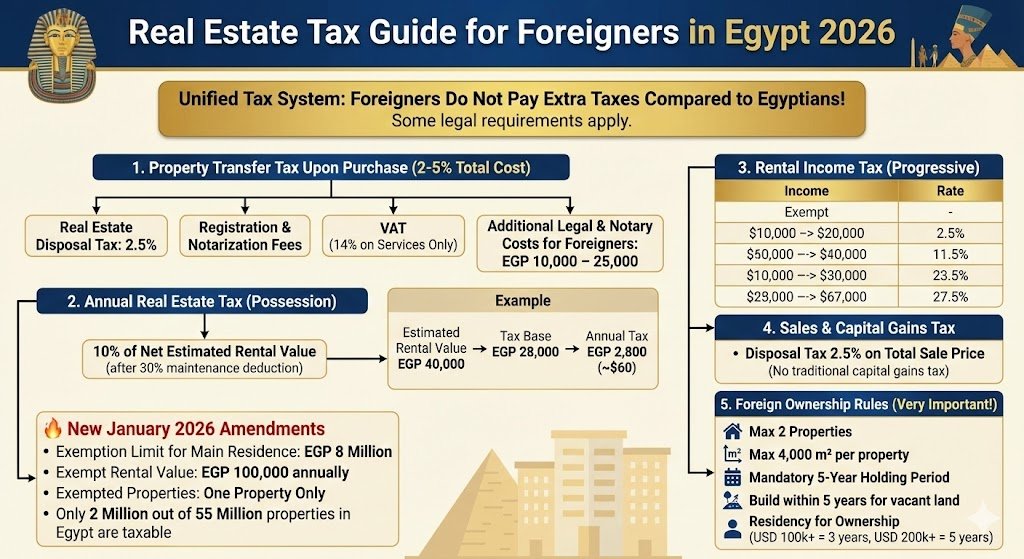
Foreign property owners in Egypt are subject to a 10% annual real estate tax, which is calculated based on the property’s assessed rental value rather than the actual rent collected. Properties with an assessed annual rental value below 24,000 are exempt from this tax, making it essential to ascertain your property’s rental assessment to evaluate potential tax liabilities. Furthermore, a deduction of 30%–32% is allowed for maintenance and expenses, effectively reducing the taxable income. For specific exemptions or details, consult the Egyptian Tax Authority or a trusted advisor.
Transaction Fees and Closing Costs
When purchasing property in Egypt, you should also consider transaction fees and closing costs. The property transfer tax stands at a flat rate of 2.5% of the sale price, generally paid by the seller. Buyers should budget for closing costs, which typically range from 7% to 11% of the purchase price. These costs include notary and registration fees, usually amounting to 1–3% of the transaction value. If you are purchasing directly from developers, it’s worth noting that you may avoid stamp duty taxes, but resale properties can come with more complex financial implications.
Foreign Ownership Restrictions and Rules
Foreign investment in Egyptian real estate is regulated, and foreigners are restricted to owning a maximum of two residential properties, with a combined maximum of 4,000 square meters. Furthermore, properties must be utilized for personal family use rather than commercial purposes. Although there is a historical 5-year holding period for property investments, exemptions are frequently available for purchases made in designated Investment Zones or new developments such as the New Administrative Capital.
Residency-by-Investment Program: Golden Visa
In recent years, Egypt has introduced property-based residency pathways, widely known as the Gold Visa program. As of 2026, investors must meet the following thresholds to qualify: for a 3-Year Renewable Residency, a minimum investment of $200,000 is required; for a 5-Year Renewable Residency, the threshold is $400,000; and those seeking Citizenship by Investment can start from $300,000. Importantly, to facilitate these transactions, funds must be transferred from abroad, and proof of foreign exchange conversion is mandatory as of September 2023.
Key Documentation Requirements for Foreign Buyers
Before proceeding with any property transaction, foreign buyers must acquire a Tax Identification Number (known as Muhsid or Tax Card) from the Egyptian Tax Authority. This is crucial for legal documentation and the proper transfer of property titles. Additionally, all transactions must be conducted in foreign currency (USD, EUR, or GBP) sourced from abroad, reinforcing the importance of international banking relationships during your purchase.
Practical Tips for Foreign Buyers
- Always verify the property’s assessed rental value to understand your tax obligations.
- Engage a local real estate agent familiar with the market, especially in cities like Hurghada.
- Consult a legal expert specializing in Egyptian real estate laws to avoid potential pitfalls.
- Ensure all transactions are accompanied by proper documentation and vet your sources.
FAQs About Property Taxes in Egypt for Foreigners
1. Are there tax exemptions for foreign property owners in Egypt?
Yes, properties with an assessed annual rental value below 24,000 are exempt from the annual property tax.
2. What are the main fees associated with purchasing property in Egypt?
The main fees include a property transfer tax of 2.5%, closing costs ranging between 7% to 11%, and notary and registration fees of about 1–3%.
3. How can I obtain residency in Egypt through property investment?
Investors can apply for residency under the Golden Visa program by meeting the required investment thresholds mentioned earlier.
Conclusion
Understanding property taxes in Egypt for foreigners is vital for ensuring a successful and compliant investment experience. With proper knowledge and guidance, such as from professionals at MAMO Property, navigating the Egyptian real estate landscape can be a rewarding venture.
Looking to buy property in Hurghada? Contact MAMO Property today for expert guidance. Visit mamoproperty.com or WhatsApp us directly.
Disclaimer: This article is for informational purposes. Consult a legal expert for personal advice.

Co-founder of MAMO Property, real estate specialist in Hurghada with 16+ years experience in Egyptian property market.