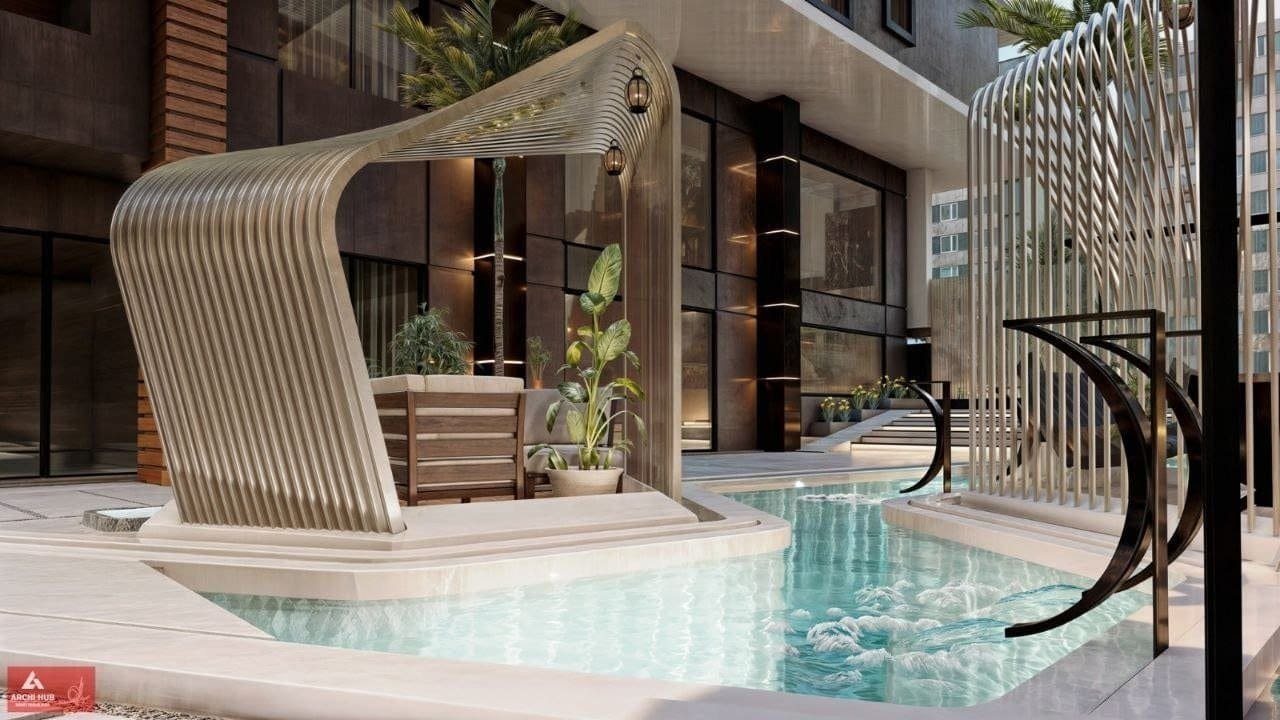
Why European Property Investors Are Flocking to Egypt’s Red Sea in 2026
Why European Property Investors Are Flocking to Egypt’s Red Sea in 2026
Record tourist arrivals, 22% airport growth, yields 3x higher than the Mediterranean — here’s why savvy EU buyers are choosing Hurghada over Spain, Greece, and Turkey.
The Red Sea coast of Egypt has quietly become one of the most attractive property investment destinations for European buyers in 2026. While Mediterranean markets grapple with sky-high entry prices and shrinking yields, Egypt’s Hurghada region is delivering 7–12% gross (never guaranteed) rental returns, Price appreciation possible, not guaranteed, and a cost of entry that is 5–8 times lower than comparable beachfront in Spain or Greece.
According to recent data, Hurghada International Airport handled 10.5 million passengers in the 2024–2025 fiscal year — a 22% year-on-year increase — making it Egypt’s fastest-growing airport. With direct flights from over 50 European cities, a new public-private partnership to expand capacity, and a pipeline of luxury hotel openings, the Red Sea is no longer a hidden gem. It’s a mainstream investment destination.
This article examines the key data points, the regulatory framework for EU citizens, and the specific areas that offer the best value for European property investors in 2026.
1. Record Tourism Growth Driving Demand
Egypt’s tourism sector has been on a remarkable trajectory. The country welcomed 15.7 million tourists in 2025, surpassing pre-pandemic levels by over 20%. The Red Sea governorate alone accounts for a significant share, with Hurghada’s airport projecting to handle 13 million passengers annually by the end of 2026.
This isn’t just about volume — it’s about the quality of visitors. European tourists, particularly from Germany, Poland, the Czech Republic, the UK, and Scandinavia, represent the largest segment of Red Sea visitors. They come for the coral reefs, the year-round sunshine (300+ sunny days per year), and the luxury resort experience at a fraction of European prices.
| Tourism Metric | 2025 Actual | 2026 Forecast |
|---|---|---|
| Total Egypt Tourists | 15.7 million | 18+ million (target) |
| Hurghada Airport Passengers | 10.5 million | 13 million |
| Airport YoY Growth | 22% | Possible, but not guaranteed (market-dependent) (est.) |
| European Tourist Share | ~60% | Growing |
| Record Single-Day Passengers | 53,000 (Oct 2025) | New records expected |
For property investors, this translates directly into higher occupancy rates and stronger rental demand. Short-term rental platforms like Airbnb and Booking.com show peak-season occupancy of 85–95% in premium areas like Sahl Hasheesh and El Gouna — figures that Mediterranean destinations simply cannot match.
2. The Airport Infrastructure Revolution
The single biggest catalyst for Hurghada’s investment appeal in 2026 is the airport public-private partnership (PPP). In late 2025, the Egyptian government selected a private-sector partner to manage and expand Hurghada International Airport under a regulated PPP model. The International Finance Corporation (IFC) is serving as lead advisor.
Key details of the PPP:
- 68 international companies expressed interest in the tender
- The Egyptian state retains full ownership via EHCAAN
- A proposed third terminal will add 10–15 million passengers in annual capacity
- Part of a wider program covering 11 Egyptian airports targeting 30 million tourists by 2030
This infrastructure investment signals long-term government commitment to the Red Sea region. For European investors, it means more direct flight routes, shorter transfer times, and higher property values as accessibility improves.
3. Luxury Hotel Expansion: The Brand Effect
International hotel brands are pouring into the Red Sea, and every new opening lifts property values in surrounding areas. In 2026 alone:
- Anantara (Minor Hotels) debuted at Soma Bay — a new ultra-luxury tier for the Red Sea
- Hilton announced its fourth property in Hurghada, cementing the city as a global hospitality hub
- Rixos opened a 442-room resort at Magawish with branded residences
- U Hotels & Resorts launched branded residences in Sahl Hasheesh
- Sofitel (Accor) expanded its El Gouna presence through Minor Hotels’ 50-property Egypt pipeline
Why does this matter for property investors? Because hotel brand presence validates the market. When Hilton, Rixos, and Anantara invest hundreds of millions in a destination, it sends a powerful signal: this market is here to stay. Nearby residential properties benefit from improved infrastructure, higher rental demand from hotel guests (a spillover effect), and capital appreciation driven by brand prestige.
4. Property Prices: 5–8x Cheaper Than Europe
The affordability gap between Egypt’s Red Sea and European Mediterranean destinations is staggering. A beachfront apartment in Sahl Hasheesh costs €750–€1,400 per m² — compared to €2,000–€4,500 per m² in Spain’s Costa del Sol and €1,800–€4,000 per m² in Greece’s popular islands.
| Location | Price per m² (EUR) | Gross Yield | Peak Occupancy |
|---|---|---|---|
| Sahl Hasheesh (Hurghada) | €750–€1,890 | 8–12% | 85–95% |
| El Gouna | €900–€2,240 | typically 7–12% (never guaranteed) | 80–90% |
| Hurghada Downtown | €370–€740 | typically 7–12% (never guaranteed) | 70–85% |
| Al Ahyaa (emerging) | €470–€820 | typically 7–12% (never guaranteed) | 75–85% |
| Turkey (Antalya) | €700–€1,500 | 4–6% | 60–75% |
| Spain (Costa del Sol) | €2,000–€4,500 | 3–5% | 50–65% |
| Greece (Crete/Islands) | €1,800–€4,000 | 4–6% | 55–70% |
The math is clear: for the same investment that buys a small apartment on the Costa del Sol, an investor can acquire a luxury beachfront unit with pool access in Sahl Hasheesh — and earn 2–4 times the rental yield.
5. Rental Yields: The ROI Advantage
Rental yields are where Egypt’s Red Sea truly outshines the competition. While European Mediterranean destinations offer 3–6% gross yields (before expenses), Hurghada properties consistently deliver 7–12% gross (never guaranteed) and 7–12% net after management fees, maintenance, and taxes.
The math works because of two factors:
- Low entry cost: A €40,000 studio in Hurghada generates $45–$60/night during peak season (October–April)
- High tourist density: 13 million airport passengers per year in a concentrated geographic area
A typical scenario for a European investor:
| Investment Scenario | Sahl Hasheesh 1BR | El Gouna Studio | Spain 1BR (Costa) |
|---|---|---|---|
| Purchase Price | €55,000 | €48,000 | €220,000 |
| Avg. Nightly Rate | $75 | $90 | $110 |
| Annual Occupancy | 75% | 72% | 50% |
| Gross Annual Income | €20,500 | €21,900 | €20,075 |
| Gross Yield | 11.2% | typically 7–12% (never guaranteed) | 2.8% |
While European properties may offer stronger capital appreciation in stable currencies, the cash flow advantage of Red Sea properties is undeniable — especially for investors seeking passive income rather than speculative gains.
6. Foreign Ownership Rules for EU Citizens
A common concern among European buyers is whether they can legally own property in Egypt. The answer is yes — with full freehold ownership.
Key regulatory facts for EU citizens:
- No restrictions on foreign ownership of residential property, including beachfront and resort units
- Freehold title — you own the property outright, not on a leasehold basis
- No capital gains tax on property sales for foreign buyers
- No stamp duty (a significant saving compared to the UK’s 10%+ or Spain’s 10%)
- Buying property can support an application for Egyptian residency; thresholds and terms change, so we confirm the current rules for your case.
The purchase process typically involves:
- Reservation — secure the unit with a small deposit (often €1,000–€5,000)
- Contract — sign the sale contract at the developer’s office or via notarised power of attorney
- Payment — complete payment per the agreed schedule (many projects offer 0% installment plans up to 5–7 years)
- Title deed — receive the official Egyptian title deed (tapu) upon completion
Important: While the legal framework is straightforward, we always recommend working with a registered real estate advisor and a local lawyer to ensure all documentation is properly filed. MAMO Property provides full legal support throughout the purchase process.
7. Best Areas for European Investors in 2026
Not all Red Sea locations are equal. Here are the top areas for European investors, ranked by yield potential and growth trajectory:
Sahl Hasheesh — The Premium Choice
Home to luxury resorts like Rixos, U Hotels, and the upcoming Anantara, Sahl Hasheesh offers 8–12% yields with strong capital appreciation (not guaranteed). Properties start from €50,000 for studios and €80,000+ for 1-bedroom sea-view units. Best for: investors seeking premium rental returns with long-term appreciation.
El Gouna — The Lifestyle Investment
Orascom’s flagship marina town combines 7–12% gross (never guaranteed) yields with an established expat community. New developments like Marina Island by Tuban and Nuba El Gouna continue to drive demand. Properties start from €90,000. Best for: investors who want to use the property personally while earning rental income.
Al Ahyaa — The High-Growth Emerging Market
The fastest-appreciating sub-market in Hurghada with Growth possible, not guaranteed. Entry prices start from €35,000, making it ideal for investors seeking maximum capital appreciation at the lowest entry point.
Hurghada Downtown — The Budget Entry Point
With prices from €25,000, downtown Hurghada offers the lowest barrier to entry. Yields of typically 7–12% (never guaranteed) are achievable through short-term rentals, though capital appreciation lags behind premium areas. Best for: first-time investors testing the market.
8. Why 2026 Is the Year to Act
Several converging factors make 2026 an optimal entry point:
- Pre-infrastructure premium: Airport PPP expansion will take 3–5 years to complete — buying now captures the appreciation before new capacity comes online
- Developer competition: Multiple developers competing for buyers means favourable payment plans (0% installments up to 7 years)
- Currency advantage: Properties priced in EUR/GBP offer a natural hedge against EGP fluctuations
- 30 million tourist target: Egypt’s 2030 tourism goal means sustained infrastructure investment for the next 4+ years
- Residency reform: The January 2025 extension (30-day processing for property-based residency) makes the process faster than ever
Frequently Asked Questions
Can EU citizens buy property in Hurghada?
Yes. EU citizens enjoy full freehold ownership rights in Egypt with no restrictions on residential property purchases. There is no capital gains tax and no stamp duty. Buying property can support an application for Egyptian residency; thresholds and terms change, so we confirm the current rules for your case.
What rental yields can I expect from a Hurghada property?
Gross rental yields in Hurghada range from typically 7–12% (never guaranteed) depending on location and property type. Sahl Hasheesh averages 8–12%, El Gouna 11–15%, and downtown Hurghada 10–14%. Net yields after management fees are typically 7–12%.
How does Hurghada compare to Turkey and Spain for investment?
Hurghada offers 2–4x higher yields than Turkey (4–6%) and Spain (3–5%), with 5–8x lower entry prices. Peak occupancy in Sahl Hasheesh reaches 85–95% vs 60–75% in Antalya and 50–65% in Costa del Sol. Direct flights from 50+ European cities ensure year-round accessibility.
What is the minimum investment to buy property in Egypt?
Entry-level studios in Hurghada start from €25,000–€35,000. Premium sea-view apartments in Sahl Hasheesh start from €50,000, while El Gouna properties begin at €90,000. Many developers offer 0% installment plans with as little as 10% down payment.
Do I need to visit Egypt to buy property?
While a visit is recommended, it is not required. You can purchase property via a notarised power of attorney. MAMO Property provides virtual tours, video inspections, and full remote purchase support for European buyers who cannot travel immediately.
Ready to Invest in the Red Sea?
MAMO Property is Egypt’s leading Red Sea real estate consultancy. We help European investors find the right property, handle all legal paperwork, and manage rentals for maximum returns.
📞 +20 11 52980998
📚 Further Reading:
- our comprehensive Red Sea location comparison guide
- our complete El Gouna buyer’s guide
- our detailed Sahl Hasheesh area guide
- our rental yield comparison and ROI calculator
- our complete guide to foreign property ownership in Egypt
- our residency-by-investment guide
- our expat communities in Hurghada guide
- our Hurghada property appreciation trends analysis
- our complete buyer’s guide covering all fees and taxes
- our installment plans and payment options guide
- our short-term vs long-term rental yield comparison
- our long-term rental market guide for landlords
- our analysis of Egyptian Pound trends and foreign reserves
- our Egypt tourism 2026 impact analysis
Eng. Mahmoud Ahmed — Co-Founder & Digital Strategist of MAMO Property.