Egypt Emerges as the Winner in the Middle East’s Travel Shake-Up — Red Sea Real Estate Impact 2026
Egypt Emerges as the Winner in the Middle East’s Travel Shake-Up — What This Means for Red Sea Real Estate
Egypt is the chief beneficiary of a historic redistribution of Middle East travel demand. While tourist arrivals across the Middle East fell 14% in Q1 2026 due to regional conflict, Egypt posted a 16% increase — making it the region’s standout performer, according to a UN Tourism report published June 2, 2026.
This divergence is not a short-term blip. It reflects a structural shift in how travellers, airlines, and international hotel groups view Egypt versus its neighbours — and it has direct implications for Red Sea real estate investors.
The Numbers That Matter
| Metric | Egypt | Middle East Region |
|---|---|---|
| Tourist arrivals Q1 2026 | +16% | −14% |
| Tourist arrivals Jan–Apr 2026 | 6.1M (+7% vs 2025) | Declining |
| Hotel occupancy (Eid 2026) | 90%+ in key destinations | Varied |
| Foreign reserves (May 2026) | Record $53.13B | — |
| Hurghada Airport passengers (Apr 2026) | 1,065,275 | — |
Egypt welcomed 6.1 million tourists in the first four months of 2026 — a 7% increase over the 5.7 million recorded in the same period of 2025. The country is targeting 30 million annual visitors by 2030.
Why Egypt Is Winning
Haitham Mattar, Managing Director for India, Middle East & Africa at IHG Hotels & Resorts, explains it plainly:
> *”Some countries benefit when others do not. Egypt is benefiting, probably because less international travelers are going to the UAE and Saudi Arabia. We’re not seeing disruption of business, but redistribution within the Middle East.”*
Three factors drive Egypt’s outperformance:
- Uninterrupted flight operations — Egypt kept its airports and airspace fully operational throughout the conflict. Several regional carriers rerouted through Egyptian airports, further boosting connectivity.
- Currency advantage — The Egyptian pound’s depreciation makes Egypt a “lower-risk, high-value” destination. At approximately EGP 52 to the USD, international visitors get exceptional purchasing power.
- Upgraded tourism infrastructure — The Grand Egyptian Museum (opened November 2025), the redevelopment of the Giza plateau, luxury Nile vessels, and enhanced Red Sea resorts position Egypt as a world-class destination.
The Red Sea Connection
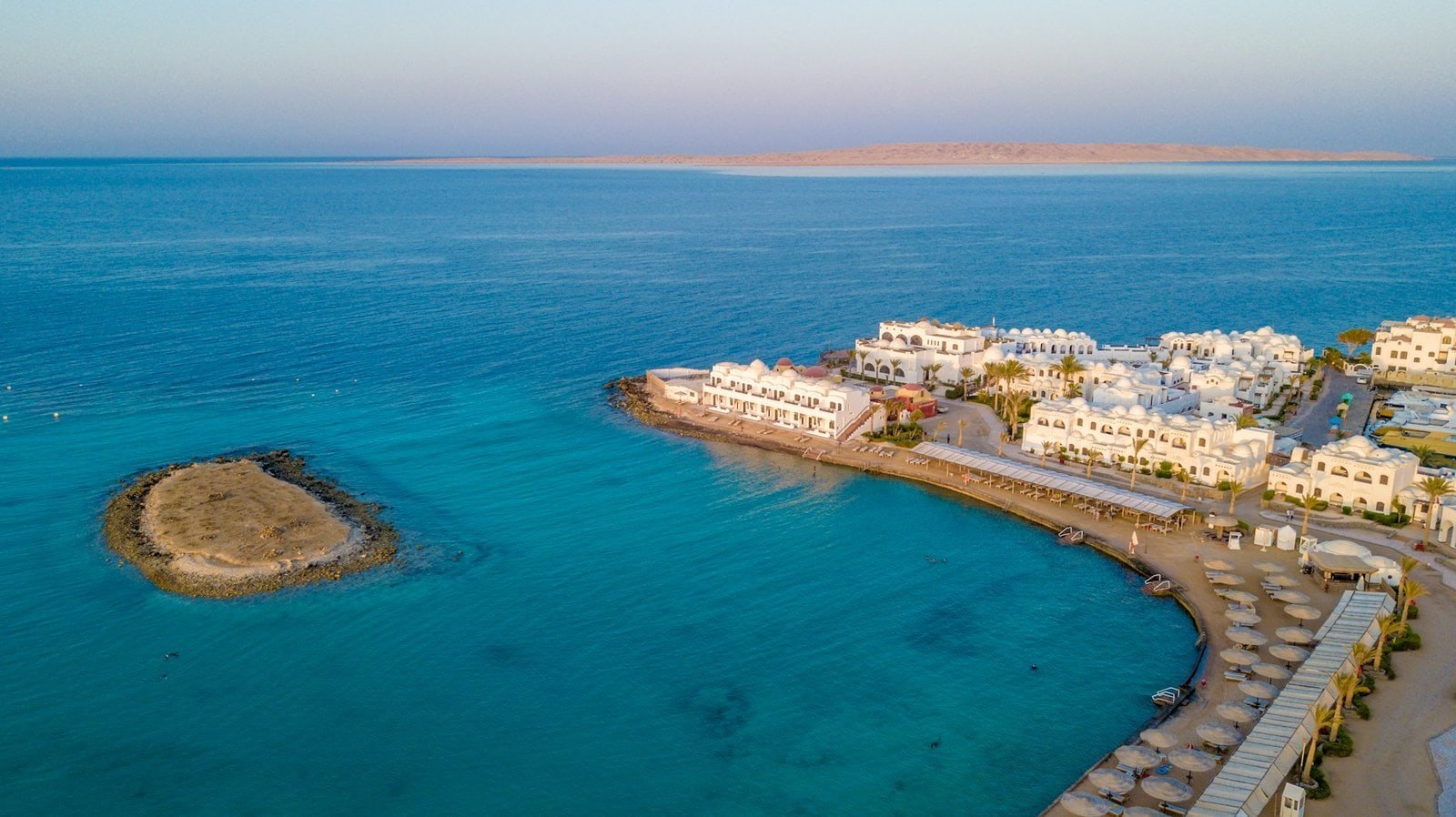
The majority of new tourism demand is flowing to Egypt’s Red Sea region — particularly Ras El Hekma, Ain Sokhna, and the legacy resorts of Hurghada and Sharm El Sheikh.
Hurghada International Airport set a new benchmark in April 2026, handling 7,125 flights and over 1 million passengers in a single month — cementing its position as Egypt’s busiest aviation hub outside Cairo.
International hotel groups are following the demand. IHG’s Mattar revealed: *”We’ve signed more deals in Egypt in the past two years than in the past 10 years.”* Egypt has approximately 185,000 hotel rooms (Knight Frank, 2025), with an additional 26,084 rooms scheduled for delivery by 2030.
Record Foreign Reserves Strengthen the Case
Egypt’s net international reserves reached a record $53.13 billion at the end of May 2026, rising $125 million from April. Foreign investors recorded net purchases of approximately $2.3 billion in Egyptian government debt in a single week — signalling growing confidence in the country’s macroeconomic trajectory.
An ongoing IMF review in Cairo could unlock a further $1.6 billion disbursement, reinforcing Egypt’s external liquidity position.
What This Means for Investors
- Tourism growth drives real estate demand. More visitors — especially repeat visitors — create natural demand for holiday homes, serviced apartments, and buy-to-let properties. Every percentage point increase in tourist arrivals translates into higher occupancy and rental income potential for property investors.
- Red Sea is the primary beneficiary. The majority of new demand and hotel investment is flowing to the Red Sea coast — particularly Hurghada, Sahl Hasheesh, and emerging corridors like Ras El Hekma and Ain Sokhna.
- Rental yields remain attractive. Gated-community properties in Hurghada are delivering net rental yields of 8–12%, significantly outpacing the 3–4% average in European coastal markets.
- Currency tailwind for international buyers. With the EGP trading at ~52 to the USD, foreign buyers benefit from substantial purchasing power in Egypt’s property market — a dynamic that is unlikely to reverse in the near term.
- Infrastructure investment is accelerating. The combination of record foreign reserves, IMF support, and sustained Gulf investment is funding infrastructure upgrades that increase property values across the Red Sea corridor.
- Counter-cyclical diversification. While Gulf markets face tourism headwinds from regional instability, Egypt is proving to be a resilient, counter-cyclical investment destination within the Middle East — offering portfolio diversification for international real estate investors.
The Bottom Line
Egypt is not simply recovering its pre-pandemic tourism momentum — it is structurally gaining market share at the expense of regional competitors. For Red Sea real estate investors, this creates a compelling window: rising tourism demand, favourable currency dynamics, and accelerating infrastructure investment are converging to drive property values and rental returns higher.
Browse the best Red Sea investment properties at mamoproperty.com. Contact our team on WhatsApp: wa.me/201152980998.
*Sources: Skift (June 11, 2026), UN Tourism Report (June 2, 2026), Knight Frank Destination Egypt 2025, Middle East Observer (June 9, 2026), Egyptian Cabinet Data (June 2026)*
❓ Frequently Asked Questions
Is buying property in Hurghada a good investment in 2026?
Yes. Hurghada offers lower entry prices (€30,000–€150,000) than competing Mediterranean destinations, year-round tourism demand, and average rental yields of 7–10% net.
Can foreigners buy property in Hurghada?
Yes. Foreigners can own freehold property in Hurghada, Sahl Hasheesh, El Gouna, and Makadi Bay under Egyptian law. MAMO Property assists with the full legal process.
What is the minimum budget for an apartment in Hurghada?
Studios start from €30,000, one-bedroom apartments from €50,000, and two-bedroom apartments from €80,000, depending on the area and finishing level.
How does MAMO Property help international buyers?
MAMO Property offers direct partnerships with 20+ Red Sea developers, verified pricing, residency-by-investment support, and after-sale property management — all with no commission for buyers.
What areas around Hurghada are best for investment?
Sahl Hasheesh and El Gouna command premium positioning and higher appreciation; Sahl Hasheesh, Al Mamsha, and Intercontinental District offer strong short-term rental yields; Magawish and El Kawther deliver the best value for entry-level buyers.
Co-founder of MAMO Property, real estate specialist in Hurghada with 16+ years experience in Egyptian property market.