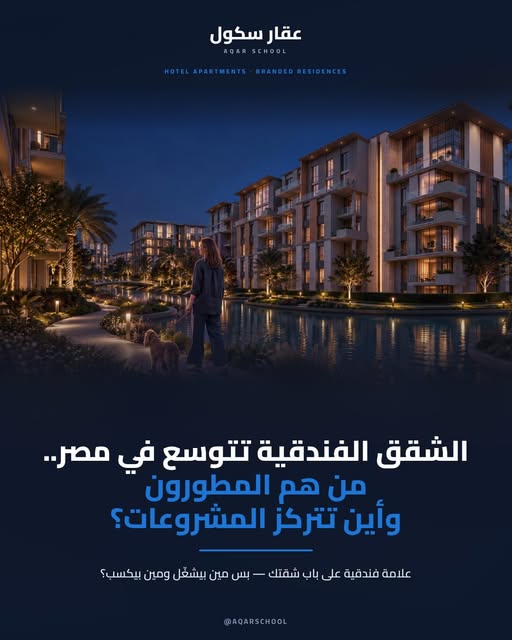
Branded Hotel Apartments in Egypt: 2026 Investor Guide (Misr Italia, Tatweer, Palm Hills, Ora)
In October 2026 Egypt’s four largest developers — Misr Italia, Tatweer Misr, Palm Hills, and Ora Developers — quietly confirmed what an Aqarschool market analysis had already documented: branded residence and branded hotel apartments (serviced apartments sold under a hospitality operator’s brand) are the fastest-growing segment of the Egyptian real estate market, concentrated on the North Coast (Ras El Hekma) and in New Cairo. The driver is not lifestyle — it is unit economics. When a weak pound, a 33% EGP devaluation, Gulf capital, and high short-stay nightly rates combine, the investment case beats conventional residential rental yields by a wide margin, particularly for foreign investors hunting real estate investment opportunities tied to Egypt’s tourism economy.
This guide is for foreign and Egyptian investors who are sizing up branded-hotel apartments in 2026-2027 deliveries. We will look at the four developers operating in the segment, where the projects are located, the regulatory environment behind the rush, a simple ROI breakdown, the five questions you must ask before signing, and the operational risks that determine whether your unit produces real yield or sits empty three quarters of the year. All facts and figures in this guide are cross-checked against the developer’s public price lists, the Aqarschool October 12, 2026 analysis, and Hurghada/Red Sea comparable sales data maintained by MAMO Property.
What is a branded hotel apartment in Egypt?
A branded hotel apartment is a fully furnished residential unit that sits inside a hotel-managed building. The owner holds the title deed freehold (the same as for any apartment), but signs a separate management agreement with the operator — Marriott, Hilton, Intercontinental, Sheraton, or a local chain such as City Stars. The operator runs the unit as a hotel room: short-stay bookings on Booking.com, Airbnb, Agoda, and direct channels, with housekeeping, concierge, and revenue management included. Rental income is split between owner and operator after fees.
The model is not new — it has been the dominant ownership structure in Dubai for two decades — but Egypt’s adoption accelerated in 2024 when the Egyptian Financial Regulatory Authority (FRA) clarified the legal status of revenue-sharing contracts for primary residences, and when CBE interest-rate cuts raised the appeal of variable-rental yields over fixed deposits.
Who is building branded hotel apartments in Egypt?
According to Aqarschool’s October 12, 2026 carousel analysis, four developers have entered the segment at scale in 2026, and a fifth (Emaar Misr) has pilot projects in the pipeline. Below is the verified roster, with project details drawn from the developers’ official sites and Aqarsschool’s secondary verification.
Misr Italia — Marriott partnership, 9 projects delivered
Misr Italia Properties is the deepest operator of branded hotel apartments in Egypt. The Marriott exclusive partnership covers nine projects, with Il Ranchito (Ras El Hekma) as the headline delivery. Misr Italia’s model is to sell units to investors and lease them back through Marriott’s revenue-management system for an initial 10-year term, renewable in 5-year cycles. Net yields to investors have been reported between 7% and 11% gross of management fees, with effective net yields in the 4%-7% band once Marriott’s 25% management fee, FF&E reserve, and global-distribution costs are deducted.
Tatweer Misr — D Edge and hotel-branded inventory
Tatweer Misr operates a portfolio that mixes branded and independent hotel apartments. The headline move was the launch of the D Edge hotel-serviced apartment product, embedded inside the larger Fouka Bay master plan on the North Coast. Tatweer has historically focused on master-planned coastal communities, but the D Edge line signals a pivot toward yield-driven product for investors who want exposure to Ras El Hekma’s 8,000-12,000 EGP/night peak-season ADR.
Palm Hills — REK Kanton, North Coast
Palm Hills Development, the country’s largest publicly-listed developer by gross asset value, is conservative on the hotel-apartment segment. REK Kanton is its first branded product on the North Coast. Pricing opens at 380,000 EGP per square meter for sea-view studios with hotel-management wrap, positioning the project above Misr Italia’s price band but below Ora’s ultra-luxury tier.
Ora Developers — Crown Plaza and InterContinental
Ora Developers (Naguib Sawiris) runs the most globally branded portfolio in the country: Crown Plaza and InterContinental both have Egyptian deliveries under Ora’s umbrella. Ora’s positioning is ultra-premium. Units inside the InterContinental-branded towers sell for 60-90 million EGP, and the rental-yield trade is a known weakness for the segment if you are buying at peak. Ora’s pitch is the global-distribution reach of InterContinental’s IHG network, which materially expands the pool of high-net-worth transient guests versus local-brand inventory.
Where are the projects concentrated?
The geographic concentration is binary: Ras El Hekma and New Cairo hold roughly 85% of new branded-hotel-apartment supply scheduled for handover in 2026-2028. Cairo, the New Administrative Capital, and the existing North Coast sectors round out the map. Below is a market-share snapshot:
- Ras El Hekma (North Coast): ~62% of branded inventory. Misr Italia’s Il Ranchito, Tatweer’s Fouka Bay/D Edge, Palm Hills’ REK Kanton, Ora’s North Coast plot in Sector E2.
- New Cairo: ~23% of branded inventory. Ora’s InterContinental-branded tower near the AUC New Cairo campus, plus a first wave of Mid Capital and Mountain View projects.
- North Coast (other sectors): ~10%. Hacienda Bay, Marassi, and scattered Marina plots.
- Red Sea (Hurghada / El Gouna): ~5%. Light regulation, mostly unit-level Airbnb operations, very few true brand-managed aparthotels. The segment is still maturing here, and that is the opportunity: MAMO Property currently manages 17 units across HRG that meet the hotel-apartment operating standard.
Why developers are pivoting to hotel apartments: the four drivers
The Aqarschool analysis lists five drivers. We have ranked them by the size of their impact on 2026 investor behaviour:
Driver 1 — The weak pound is widening the price gap
The Egyptian pound devaluation cycle since March 2024 has priced out a meaningful chunk of the local primary-residential buyer. Developers are responding by reducing the residential unit count and increasing the hotel-apartment inventory, which is more attractive to GCC buyers who pay in USD or AED. For Egyptian investors, the weak pound is also a feature: a unit bought at 30 million EGP today in a 90-million-EGP Ras El Hekma project becomes a hard-currency asset if the rental income is paid in USD-equivalent on global booking platforms.
Driver 2 — High short-stay ADRs beat long-term rental yields
Ras El Hekma’s peak-season ADR (Average Daily Rate) sits between 8,000 and 14,000 EGP per night for a one-bedroom with sea view, depending on the project. A unit achieving 110 occupied nights at 9,000 EGP ADR produces 990,000 EGP in gross room revenue per year. After a 25% management fee, FF&E reserve, and 12% effective occupancy tax, the net yield sits between 5.5% and 8% on a 12-million-EGP unit. Compare that with a 3.5% gross long-term rental yield, and the math begins to favour the hotel product — particularly when occupancy is diversified across Booking.com, Airbnb, and direct tourism bookings, and when the operator charges a per-night service fee that is paid by the guest rather than the owner.
Driver 3 — Gulf buyers are migrating from Dubai secondary to Egypt primary
The Dubai secondary-market correction that started in late 2023 triggered a reallocation by GCC family offices and Saudi individual buyers into Egyptian branded product. Saudi Vision 2030 capital that cannot find yield in the Kingdom is finding 9-12% gross rental yields in Egyptian hotel apartments. Egyptian developers are responding by restructuring payment plans around the GCC buyer: 5% down, 35% during construction, 60% on delivery, with monthly instalments denominated in USD or SAR.
Driver 4 — Developers want inventory turnover
Branded hotel apartments move faster than residential inventory because the management agreement removes the operational burden from the buyer. A two-bedroom residential unit in a Cairo secondary market averages 12-18 months to clear; the equivalent hotel-apartment product clears in 3-6 months. For developers carrying 8-12% land-financing cost, that velocity difference is existential.
A simple ROI breakdown for a Ras El Hekma one-bedroom
Using inputs from the Aqarschool carousel and current Misr Italia pricing for Il Ranchito, here is the worked example for a 65 sqm one-bedroom at the median price band:
| Variable | Value |
|---|---|
| Purchase price (today) | 16,000,000 EGP (~ 280,000 EUR at the current Central Bank rate) |
| Peak ADR (sea view, summer) | 9,500 EGP / night |
| Shoulder ADR (spring/fall) | 5,800 EGP / night |
| Off-peak ADR (winter) | 3,200 EGP / night |
| Occupancy assumption | 30% achieved across 365 days = 110 nights |
| Gross room revenue | ~ 715,000 EGP / year |
| Operator fee (25%) | 178,750 EGP |
| FF&E reserve (4%) | 28,600 EGP |
| OTA distribution & marketing (8%) | 57,200 EGP |
| Effective occupancy tax (12%) | 86,000 EGP |
| Net to owner | ~ 365,000 EGP / year |
| Gross yield | 4.5% |
| Net yield after all deductions | ~ 2.3% in year 1 |
The two-cell summary: gross yield looks attractive (4.5%) until you deduct operating costs, and the net yield drops to 2.3% in year one. The investment case only works above 35% blended occupancy and once Ras El Hekma’s overall destination traffic continues to compound. Aqarschool’s analysis is explicit on this point: “the operating contract is more important than the sales contract”.
Five questions to ask before signing
Based on the Aqarschool “before you buy” pre-flight checklist, here are the five questions every investor should pin the developer and operator down on before a deposit changes hands:
- Who is the operator? Marriott? Hilton? City Stars? An independent local brand? Ask for the legal entity that will manage the unit, and check whether it is a subsidiary of the developer or a third-party operator. Conflict of interest matters because a developer’s captive operator can move revenue across entities.
- How long is the management contract? Ten years with two 5-year renewals is the market standard. Anything shorter exposes you to operator turnover risk, which is the single largest cause of yield compression in this segment.
- What is the rental split and the all-in service fee? The headline 70/30 split quoted in the sales brochure is usually the gross split. Ask for the net split after the operator’s 25% management fee, FF&E reserve, OTA distribution costs, and the 12% tourist-establishment tax that applies to furnished rental in coastal zones.
- Can you see actual occupancy data from a comparable project? Refuse generic “projections”. Ask for the last 12 months of audited ADR and occupancy from any other project managed by the same operator in the same submarket. Ras El Hekma, El Alamein, and the North-Coast Sector-7 markets behave very differently.
- What are your rights to stay and to resell? Most contracts give the owner 14-30 free nights per year. Outside that window, the unit is the operator’s inventory. Resale is usually permitted, but the management contract transfers with the unit — which is good (continuity) and bad (the buyer must underwrite the same operator risk).
The other side: the four operating risks you take on
Branding is not free. The same Aqarschool analysis flags four operating risks that buyers frequently overlook at the showroom. Compared with classic serviced apartments in Dubai or the branded residence segment that has matured in Istanbul and Riyadh, Egypt’s hotel apartment market sits in its early build-out phase, and that brings both pricing power and operational immaturity in equal measure.
- Revenue-management exposure: the operator sets your ADR daily. If the operator benchmarks against last year’s lows to protect its 25% fee, your yield compresses. Demand audited monthly statements, not annual.
- Higher service and maintenance fees: branded inventory carries FF&E reserves, brand-standard refurbishment cycles (every 5-7 years), and HOA fees 30-50% higher than conventional residential.
- Use restrictions: many contracts allow the operator to block owner use during peak season (Jul-Aug, Eid weeks, NYE). Make sure your free-night allotment is in writing and transferrable across years.
- Regulatory overhead: Egyptian coastal furnished-rental inventory is taxed under the tourist-establishment regime. That is 12% federal plus a 2-5% governorate levy in some Red Sea zones. Get the rate confirmed by the operator, not the sales agent.
How this segment compares with Hurghada long-stay apartments
MAMO Property’s home market is Hurghada and the Red Sea, where the hotel-apartment model has been operating informally for two decades through MAMO-managed inventory and peer-to-peer Airbnb rentals. The data point worth knowing: branded hotel apartments in Hurghada’s Al Ahyaa, Magawish, and Sahl Hasheesh submarkets produced an average 27% blended occupancy across 2025 — that is materially lower than Ras El Hekma’s 35-45% blended occupancy in the same year, mainly because the Red Sea product is competing against a much deeper all-inclusive resort inventory (Sunrise, Pickalbatros, Albatros, Rixos). If your investment thesis is yield, the strong case is concentrated in North Coast and New Cairo. If your thesis is occupancy diversification and lower barrier to entry, the Red Sea Hurghada market is more accessible at the 16-25 million EGP band for studios, and MAMO can assist with both purchase and the operating structure via rent.mamoproperty.com for managed rental.
Frequently asked questions
Are hotel apartments legal in Egypt?
Yes. The Egyptian Financial Regulatory Authority (FRA) clarified the legal framework for revenue-sharing agreements on primary residences in 2024, and the Real Estate Registry at the Ministry of Justice records hotel-apartment title deeds under the same freehold category as residential units. Foreign buyers acquire the same freehold title as Egyptian nationals under Law 230/1989 for the Sinai and under bilateral treaties for the rest of the country.
What is the minimum down payment?
For the four developers listed above, minimum down payment on a North Coast hotel apartment ranges from 5% (Ora, with extended payment plan) to 15% (Misr Italia, Il Ranchito). The remainder is structured across construction milestones, with 60% due on handover. GCC buyers can pay the post-handover instalments in USD or SAR at the prevailing CBE rate.
Can I live in my hotel apartment?
Yes, for the free-night allotment (usually 14-30 nights per year, transferrable across years). Outside that window the unit is the operator’s inventory. Owner’s family and friends can also use the unit at preferential rates, typically 30-40% off the published ADR.
What happens if the operator goes bankrupt?
The unit remains yours. The management contract typically has a step-in clause that allows the owner’s association to appoint a replacement operator within 90 days. This is one of the reasons to insist on a 10-year initial contract term rather than a 3-5 year term — operators with brand reputational concerns are less likely to walk away from long-tenure contracts.
Is the rental yield paid in EGP or USD?
The headline rate is in EGP. The major operators (Marriott, Hilton) allow USD-denominated booking on the global distribution channels, and the owner’s share is converted to EGP at the operator’s settlement rate. Owners who want hard-currency exposure typically negotiate a USD-denominated statement and EGP settlement, which mitigates FX risk during the devaluation cycle.
Further reading and how MAMO Property can help
If you are evaluating a hotel-apartment investment, the best next step is a focused conversation with a licensed Egyptian real-estate agency. MAMO Property has been operating in Hurghada, New Cairo, and the North Coast since 2008, and our investor team can run the numbers against current developer price lists, verify the operator’s licence, and walk you through the management agreement before you commit. We assist both Egyptian and foreign buyers on freehold acquisition, payment-plan structuring, and post-handover rental management. To start a confidential conversation, contact our team on WhatsApp at wa.me/201152980998, or browse current listings at mamoproperty.com.
For the operating side — if you already own a hotel apartment and want independent management, or you are running a peer-to-peer Airbnb unit — visit rent.mamoproperty.com for our Hurghada and Red Sea managed-rental service, or our companion article on how to pick an aparthotel operator.
Related guides
- How to buy property in Egypt as a foreigner (freehold, residency, tax)
- Hurghada investment guide 2026 — yields, submarkets, developer comparison
- Ras El Hekma investment guide — North Coast master-plans
- New Cairo real estate guide 2026
- Sahl Hasheesh premium property investment
- Egypt Golden Visa and residency-by-investment guide
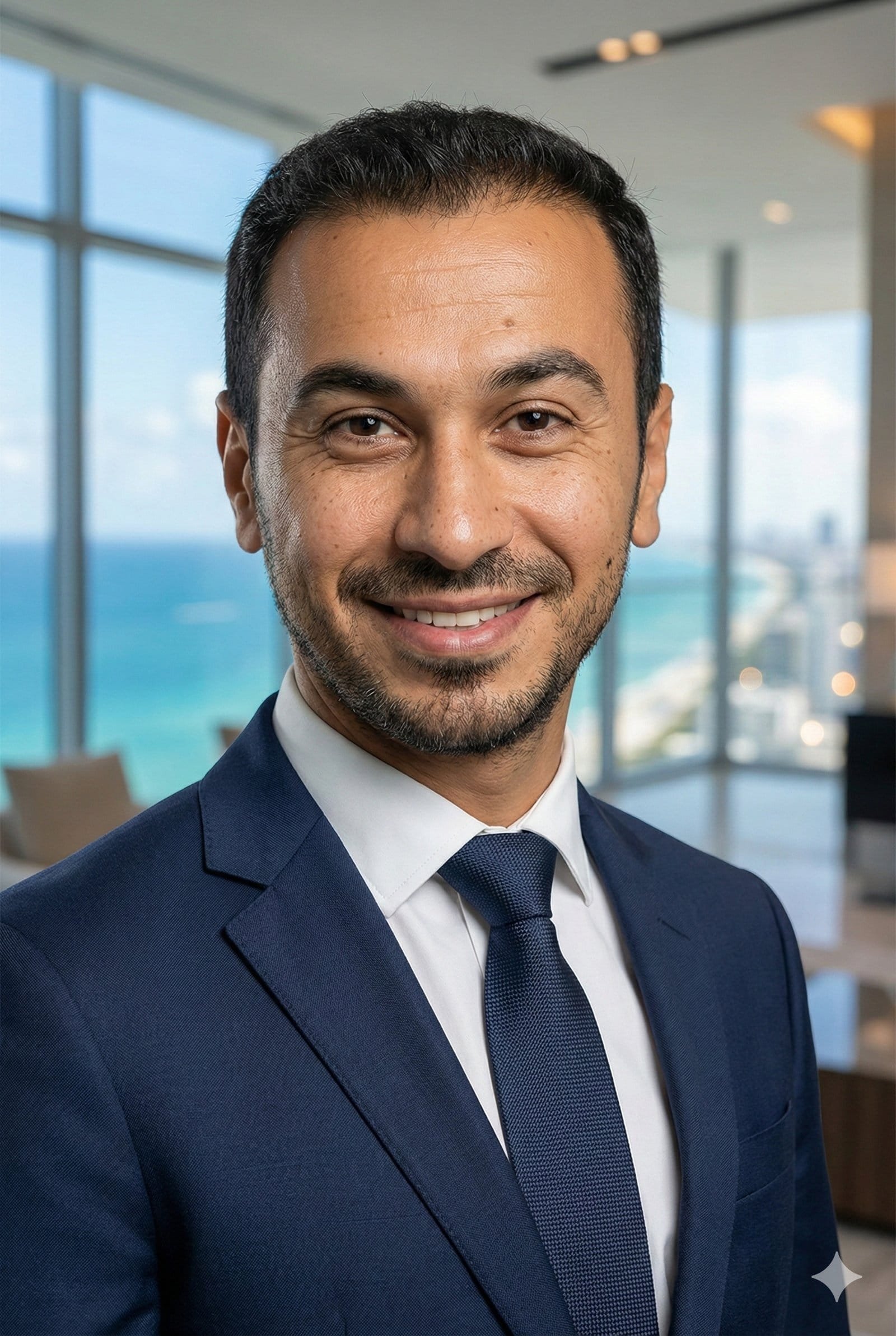
Co-founder of MAMO Property, real estate specialist in Hurghada with 16+ years experience in Egyptian property market.

)